Saturday, 23 November 2013

Carmen de los Geranios

The Carmen of Geraniums has a nice little story. A Belgian painter, Max Moreau used to own this house. Apart from the artist’s close circle of friends not many people knew that he was in love with Granada and lived here for over 30 years. After his death he left his home to the Town Hall who restored the building and turned it to a museum. Their aim was not only to bring Max Moreau closer to the visitors but also to preserve the carmen as a typical Granadian heritage.

It has three buildings. One is used as a gallery for the paintings, the other is the room the artist worked in, and the third one was his living quarter.


With the three buildings come three levels. The main level connects the gallery to the living quarters. There’s a little platform to enjoy the view of the Alhambra from that you can reach through a set of stairs. Finally there’s a backyard with benches and a pond on the side. In front of the studio there’s a gorgeous three tiered fountain.


Visiting the Carmen de los Geranios is free. It’s open from Tuesday to Saturday: 10.00 to 13.30 h. and 16.00 to 18.00 h. On Sundays, Mondays and on holidays is closed. You can find it on Calle Nueva de San Nicolás, 12.

I ventured inside this carmen on a free photo tour I found on the internet. My guide was a Spanish girl who spoke English quite well. She didn’t overwhelm us with information but only taught us the three most important things that we could practice and master during the tour. I loved walking around Albayzín with the group and taking photos of everything that took our fancy. You can find their website here.


Thursday, 21 November 2013

Carmen de la Victoria

This lovely carmen used to be a convent that was destroyed in the 19th century. Since 1945 the Granada University claimed it as a private university residence for visiting lecturers and professors. There are many private events organised here as well. Even though during the history of the carmen the buildings and their purposes have changed the garden itself has stayed the same for over a hundred years. Now the Carmen de la Victoria is the oldest and one of the most beautiful Moorish-inspired gardens of Granada.


Looking after the garden is supervised by an expert in Moorish gardening who has replanted it so it looks very similar to the gardens during the Nashrim era.


The garden has several levels and there’s something that pulls your eyes in every corner.
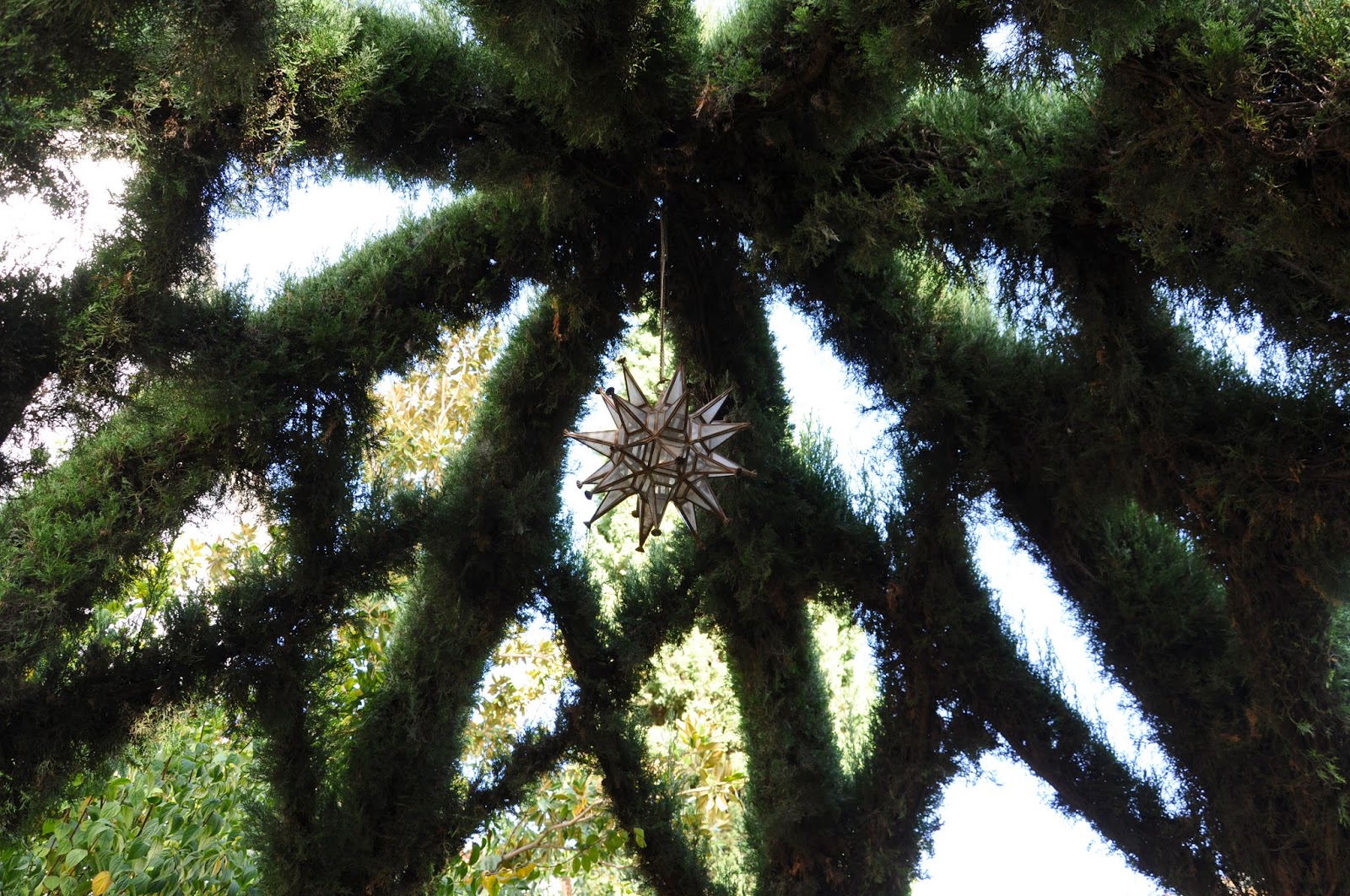
It is full of lamps and lights. I can imagine how nice must it be to sit on one of its benches on a hot summer night in the light of the candles looking over the Alhambra.


It is free to visit the Carmen de la Victoria. All you have to do is to ring the bell and wait, the door will open in a few minutes with a female voice reminding you to close the gate behind you. You can find it in the Albayzín on Cuesta del Chapiz, 9.

Tuesday, 19 November 2013

Granada and its carmenes

Granada is famous for its many carmenes, houses that were built in a very unique style during the Muslim era. They are surrounded by high walls with no windows for defence and one little door to go in. This means that you don’t have any idea what might be inside the building when you look at it from the outside. When you step through the door a whole new world awaits for you.

These buildings usually have a square shape.The house is at the back and in front of it there's a huge, designed garden. This garden is full of life, a little green private oasis in the middle of the town and its design is only limited by the owner’s imagination. The word carmen originates from the Arabic karm which means 'grapevine' and you can always find grapes in them that climb up on the walls then continue overhead led with wires to provide shade. There are other plants as well, however, such as pomegranate, orange or lemon trees and many flowers that give the courtyard a lovely smell.

Those carmenes I have seen are in multiple levels (the neighbourhood of Albayzín is built on a hill) and on every level there was something special to explore. A pond, a fountain, a beautiful, well-positioned tree or a dense bush shaped as a dome. The water in the courtyard is led through by little channels and fountains in varied shapes and sizes.

There are many places in the city where you can visit a Carmen. Many hotels in Albayzín are carmenes and there are many carmen restaurants as well. These not only show you their hidden interior and their delicious food but also provide an amazing view over the Alhambra, too. It’s worth going for the experience even though they are quite pricey.

Even though most of these houses are in private hands there are a few that you can go into for free. During my time in Granada I visited the Carmen de la Victoria, de los Geranios, and de los Martires and their hidden treasures.


Monday, 18 November 2013

Granada Free Tour

As with every place we go to I attended a free tour here in Granada, too. Before I launch into it, however, let me tell you a little history of the town. Granada was under Muslim influence for a very long time and it was the last stronghold of the moors when Ferdinand and Izabella reconquered Spain. Due to this the Moorish influence is very strong in the architecture.

It all started in Plaza de Santa Ana at the foot of the Alhambra, where the Iglesia de Santa Ana can be found. This church was originally a mosque called Almanzra but in 1501 they transformed it into a Catholic place for prayers. Can you see the three balls on top? You can find these on top of mosques in varied numbers. As to what they might represent there are many theories. The point here is that in order to insult the Muslims they didn’t just take the balls off but pushed a cross on top of them saying that Islam is inferior to Catholicism.


Right next to the Iglesia there’s a lovely fountain. There are many fountains in the historic parts of the town as the Muslims were very clean people and had to wash five times a day and before stepping into the mosques. The water flowing out is always drinkable and very tasty.


Right next to the church flows the River Darro. The river begins in the surrounding mountains where years and years ago there was a gold mine. It is empty of gold by now but the people of Granada believe that during storms and long rains the mud that flows down from the mountain could contain little nuggets of gold and even today you can find some elderly people who sit on the sides of the river after the rain trying their luck.


It seems that the builders of the city recycled everything they could put their hands on. From the gravestones of the Jewish cemetery (we saw examples for that in Barcelona, too) to those old fashioned wash basins where grandmothers and their mothers used to wash their clothes. You can find these broken up and embedded in the streets. Here next to the river there are many with lines carved in them, these had come from washing basins.


Here’s a door that’s called the ‘mother-in-law door’. Can you guess, why?


The city of Granada was very well defended. You can see examples for this in the old city walls (there were six of them) or in the varied sized steps in the Albayzín. With the first glimpse it’s not obvious why but when you think about it, the soldiers, who were wearing full armour and weapons, couldn’t just run up on the stairs, they actually had to pay attention to where they stepped effectively slowing them down.


Another part of the defence was the door itself. As you can see, many houses here have huge wooden doors that contain a smaller door. They only opened the big ones when animals or a cart needed to go through, they used the small one for everyday use. The height of if was such that the person who wanted to go in had to bow and put his head in first. Providing the perfect opportunity to the person on the other side to chop their head off.


I finish off with a story about the surnames of the people. According to history when the Catholic kings took over the town they expelled the Jewish and the Muslims…or they offered them a chance to stay if they convert to Catholicism and pay lots of money. All those people who stayed got a new Christian name. They weren’t very creative and used animals and plants and other everyday things as surnames. Therefore if your Spanish friend has a plant’s name in their surnames there’s a high chance that their ancestors were Muslim of Jewish.


Sunday, 17 November 2013

How to eat a ‘granada’

I think not many of you know this but ‘granada’ actually means pomegranate in Spanish. You can often find a granada tree in Granada and there was one just behind our terrace. Here it’s such an everyday thing but for me it’s a very exotic fruit.

One weekend when Juan Carlos and Meritxell were here to visit us we bought a pomegranate in the busy fruit market of Albayzín and Meritxell showed us how to eat it Spanish style.

1.      Make the cut!
It’s such a cool looking fruit! The ripe ones are not so shiny and smooth. When you cut it the seeds have to have a very deep red colour. Watch out, it stains!


2.      Squash and squeeze
It’s easy to do when the fruit is ripe, the seeds will just fall in the bowl. Here’s an action shot of Meritxell squeezing the pomegranate, seeds falling, juice flowing.


3.      The evil yellow bits
DO NOT EAT THE YELLOW BITS! Now that I’ve scared you to death I can tell you that there’s nothing wrong with the yellow skin it’s just that it doesn’t taste that nice. Make sure you pick all the bits out.


4.      Pimp it up
Now comes the fun part. Add a little sugar, or even a little red wine to the seeds. Mix it all up.

5.      Now that it’s all ready, all you have to do is put it away. No, not in your mouth, in the fridge. It cools down and the taste of your little concoction will blend together nicely.

6.      Find a sunny spot with your friends. Let them complain about the hot weather then pull out the granada mix from the fridge and serve with a dramatic ‘TA-DA’. Always a winner.

 Enjoy.

Saturday, 16 November 2013

El Torcal Nature Reserve

When I mentioned to one of my fellow Hungarian expats that we’re going to visit Ronda she suggested popping into the El Torcal which we can do with a little detour on our way. I pride myself in having a good knowledge of the places worth visiting in the regions we move to but I had never seen or heard of this place. We were easily convinced as we’re always up for seeing interesting places and the photos on the internet promised us something very unique. We set off early on Sunday and drove over to the Nature Reserve.


There’s a visitor centre with parking facilities and an incredible viewpoint close by. When we stepped out of the car in El Torcal we felt like we were on a different planet, we’d never seen anything like this before.


El Torcal is known for its unusual rock formations made of limestone. They are the result of tectonic movements in prehistoric times when the seabed was lifted about 1300m out of the water. The elements attacked the 150 million-year-old limestone with wind, rain and ice from all directions and slowly carved away the softer layers and sharp edges creating incredible forms and shapes.


The ground is hard to walk on as it’s very wild and rocky however there are three routes available with various lengths indicated with different colours. We chose the medium, 2.5km long yellow route which took us to a viewpoint called ‘Las Ventanillas’ at 1200m. The signs said it will take us 3 hours but only took us 1.5 hours. From the viewpoint on the way you can see the whole Nature Reserve and the coastline of Africa.


The Sierra de Torcal mountain range lies just south of the town of Antequera and can be accessed from the A45 road, from the village of Villanueva de la Conceptión. The temperature can go to extremes here so it is advised to visit during spring or autumn. Here is the park's official webiste (Spanish).