Thursday, 26 June 2014

The Royal Alcázar of Seville

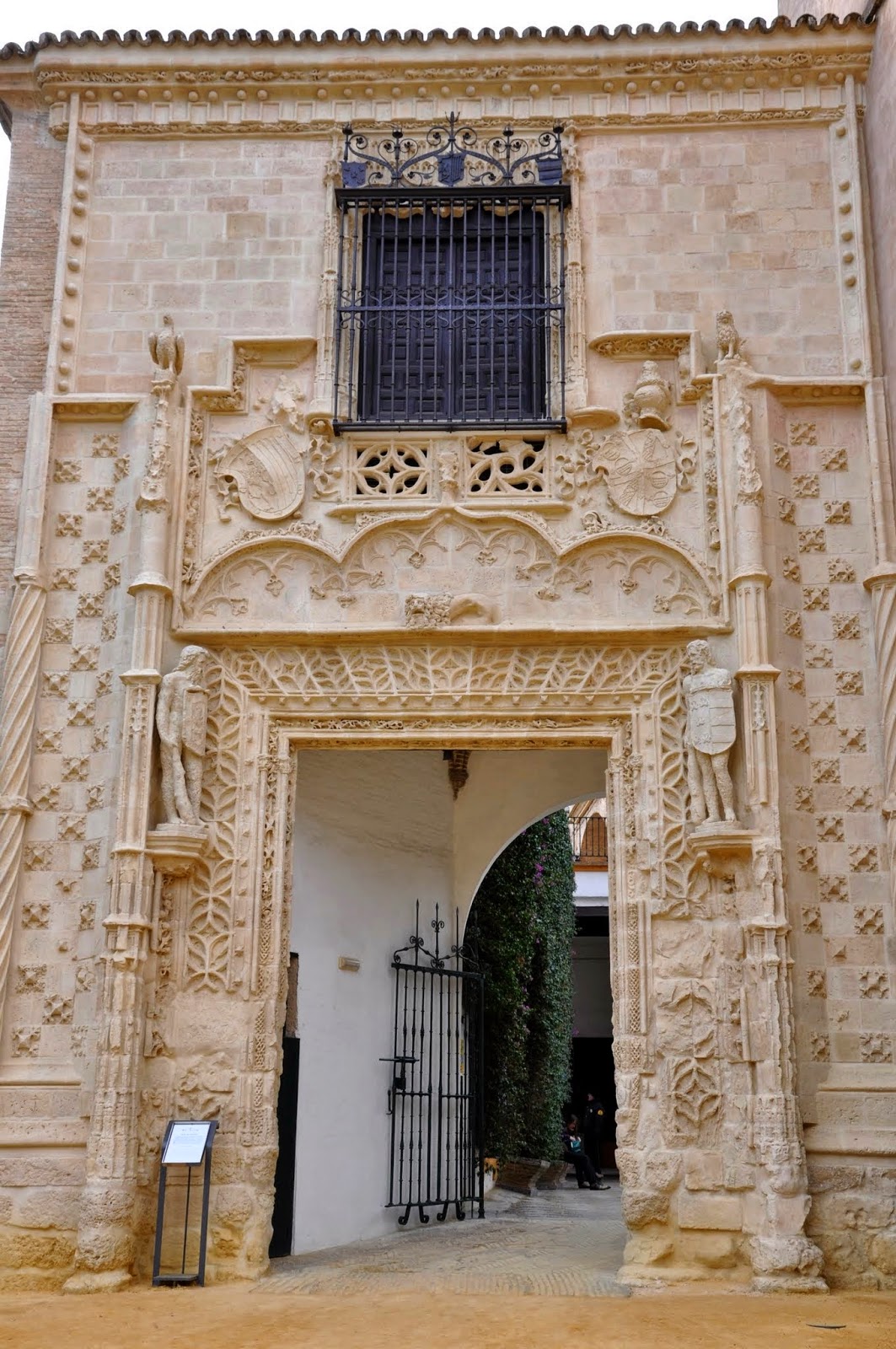
If you don’t get a chance to see the Alhambra in Granada, you can at least marvel at its little sister, the Real Alcázar, which is one of the most visited sites in this gorgeous city. This is the oldest royal palace in Europe that is still in use (the top floor is the royal family’s residence in the city) and we always made sure to send all of our visitors in.


Originally the palace complex was built in the beginning of the 8th century by the Moors in order to control the River Guadalquivir. This is one of the best remaining example of the mudejár architecture (the mix of Muslim and Christian motives).


The following monarchs all added a building here and there. It ended up having five different palaces built in five different centuries.


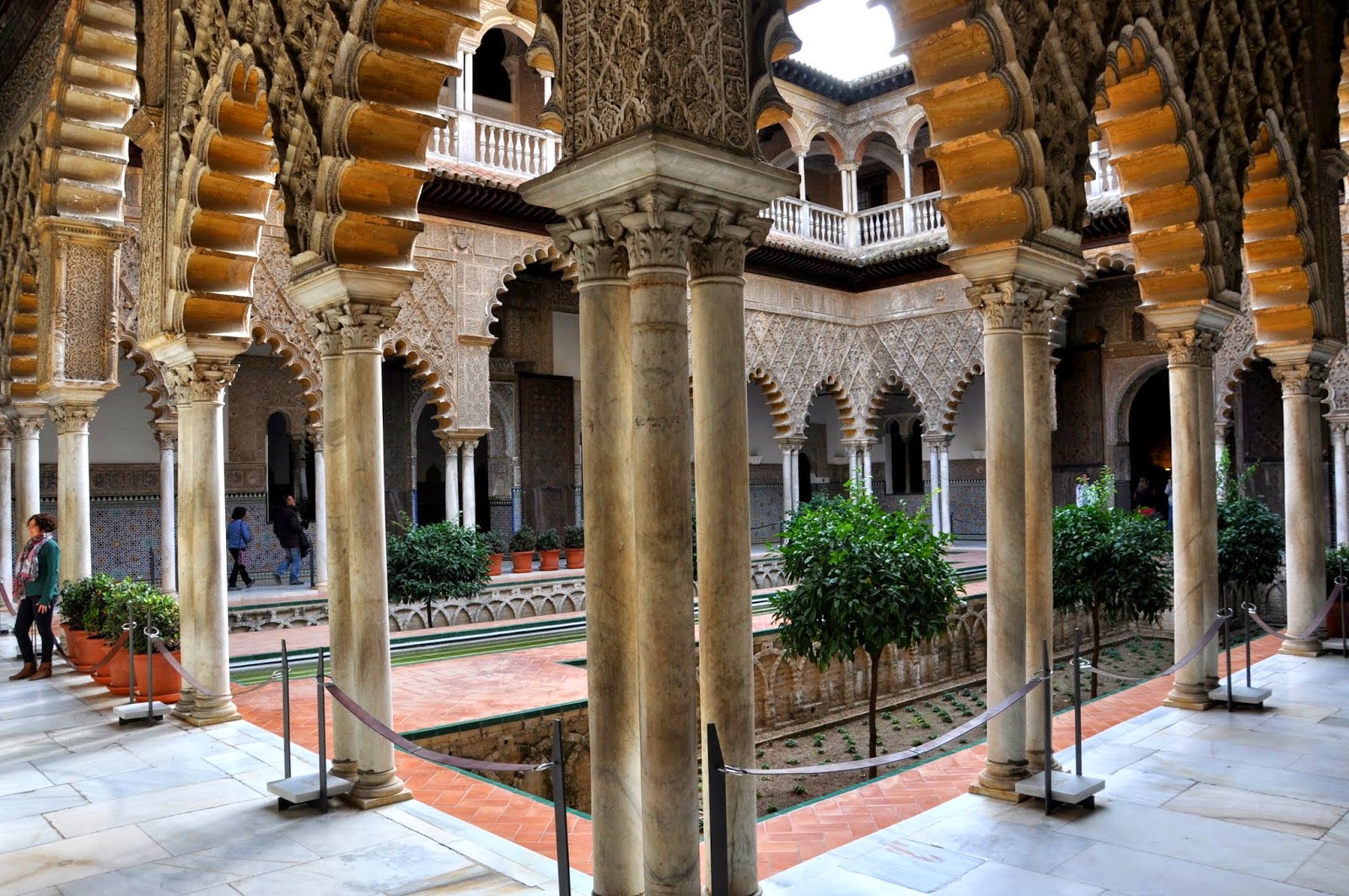
Just like everywhere in Spain, you can find some interesting legends here in the Alcázar, too. Such an example is connected to the Patio de las Doncellas, or ‘the Courtyard of the Maidens’. According to this every year the Moor king demanded 100 maidens every year as a tribute from the Christian kingdoms in the Iberian Peninsula.




We had to search for a while but eventually found the ‘Los Baños de Doña María de Padilla’, or the Baths of the afore mentioned lady. These are basically water tanks that look very interesting with its many arches.


Another interesting building is the House of Trade (La casa de Contratación). This was built by the Catholic monarchs to regulate the trade between Spain and the New World. In fact, this is where Ferdinand and Isabella welcomed Columbus after his second voyage.


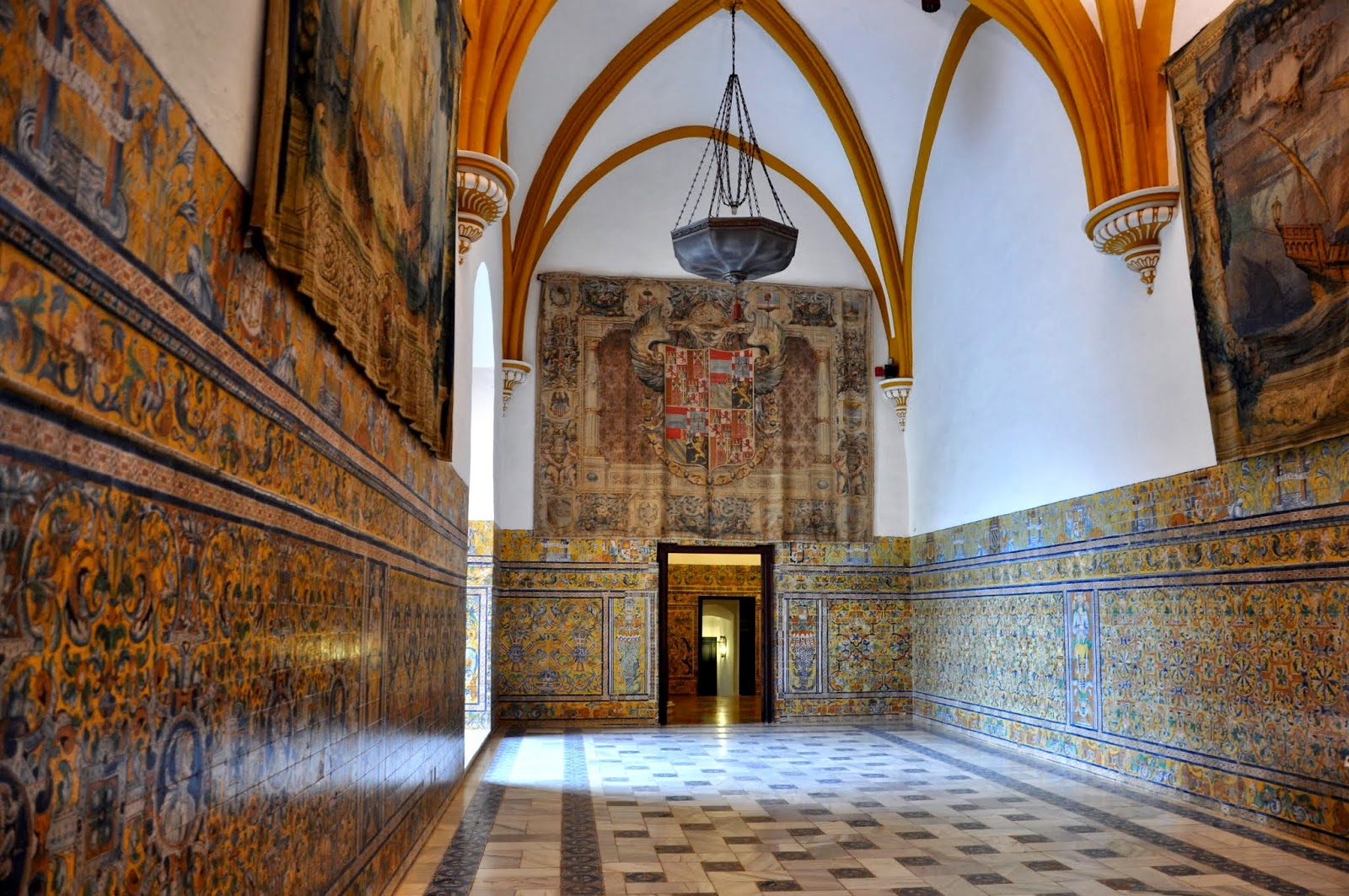
The Gothic Palace is also worth a look. It is basically a huge, rectangular room. The walls are covered with gorgeous tiles and even more gorgeous tapestries that are just huge! They look so old! Walking around this room will make your jaw drop.


Finally, the Arabic style gardens. They are pretty extensive but definitely worth a look. In every corner and niche there´s something to discover, a line of trees, a little statue or a fountain.


There´s a café in the garden where you can sit down and relax after walking around. Don’t be surprised though when colourful peacocks come to beg you for some food!


Some more photos about the Alcazár.


For more information have a look at the official website here.

Friday, 20 June 2014

The Wolf Park in Antequera

Just after moving to Andalusia Paul came across an article that listed ’10 secrets of Andalusia’. Amongst these was one that sound slightly crazy but nevertheless interesting, a Howl Night in a Wolf Park. We searched for more information about the place, picked a day when there was full moon and went to see what the fuss is all about.

The private park is owned by a German couple who also speak perfect Spanish and English. They have 26 wolfs running around a huge, 40 hectar protected area. Their aim is to observe their social behaviour which is very hard in the wild. They do have to compromise but they try to keep them as free and wild as it’s possible under these semi-natural circumstances. Incidentally, their neighbour has 2500 goats so the feeding of the ‘lobos’ is not a problem.

In the first hour you have the chance to walk around and have a look at the domestic animals (peacocks, goats and such) which the kids all seemed to love, then they serve you some food. After the quick tapas session we finally started the tour just after 20.30.


During the 2.5-3h guided tour in the park you get a chance to see four types of wolves up close. The first ones were timber wolfs from Canada.


Then this white tundra wolf from Alaska.


Iberian Wolves.


During the summer they don’t eat much because of the heat and they lose a lot of hair. Because of this they weren’t in the best shape.


When the guides were throwing food to them they kind of behaved like oversized dogs. However when they growled or snapped at each other the hair stood up on my arm. Even though they seemed timid to others, to me they just looked like pure danger. You look into those amber eyes and you know you wouldn’t have the smallest chance to survive. It is a strange experience.


The tour itself was VERY informative and educational. It was given in English and Spanish. My level of Spanish is around low B2 but I was able to understand everything. Both guides are very passionate about what they are doing and this shined through their words. I found it very interesting to hear about the pack structure and their individual habits. And hearing them howl was just the icing on the cake.


Overall it was a great night, definitely something different to do. If you want to know more about them, check out their website. They speak perfect English and are happy to help with anything you need.

Thursday, 19 June 2014

Cycling the Via Verde de la Sierra

One of the things we really wanted to do in Andalusia before we leave was to do a day of cycling on the Greenway, la Via Verde. There are many of these Greenways around Spain which are unused or unfinished railway lines converted into recreational routes for activities such as hiking or cycling. The one we chose was la Via Verde de la Sierra, close to the Sierra de Grazalema between Olvera and Puerto Serrano.


The deal is usually simple. You go to one end, hire a bike for a day (12 euros at the time of writing this blog), ride around then return it in exchange for your passport/ID card. We rocked up to Olvera just as the guy in front of the bike hire shop was leaving. He said it’s too hot now and there were hardly any customers so he decided to go home. We caught him just in time.

We got on our bikes and started cycling. It was a lovely feeling to cycle on a proper bike again, it felt so liberating! I love the Sevici bikes (the Boris bikes of Seville) but they can be tough to ride. The view was just stunning all around us.


The bike ride is actually quite fun as on the 36km distance between the two villages there are 30 tunnels, some of them short but some of them quite long. Apparently a few years ago some of them were sadly left without electricity due to vandalism but by now it’s all up and running, thanks to some EU funding. Going through these tunnels was also great to cool off after cycling in the sun.


The part of the route that leads through a National Park is the most beautiful.


We stopped for lunch at km 28 then turned back. There was a 1% incline on the way back but it was nothing major. Around km 22 there’s a bar so you can refresh yourself with a cold drink.

It was a great and easy ride and the views of the surrounding areas were just incredible.


Olvera is a gorgeous white village with a church and a Muslim castle that seems to grow out of the rock itself. The way to the Via Verde is well signed but if you can’t find it just ask anybody and they will point you in the right direction.

If there’s nobody around the bike hire shop don’t worry, just give them a call during the opening hours (10-14, 16-18) and they will come to help you. You have the option to hire the bikes for only half a day, too. More info and exact location can be found on their website.

I found this detailed description of the Via Verde in English very useful.

Enjoy!